New Castle County
Rocky clay over shallow bedrock, mature oak and tulip poplar, and city tree rules in Wilmington and Newark.
About our company
We're a local tree care company based in Wilmington, with experienced tree experts, full insurance and our own crews on every job.
5.0 on GoogleWho we are
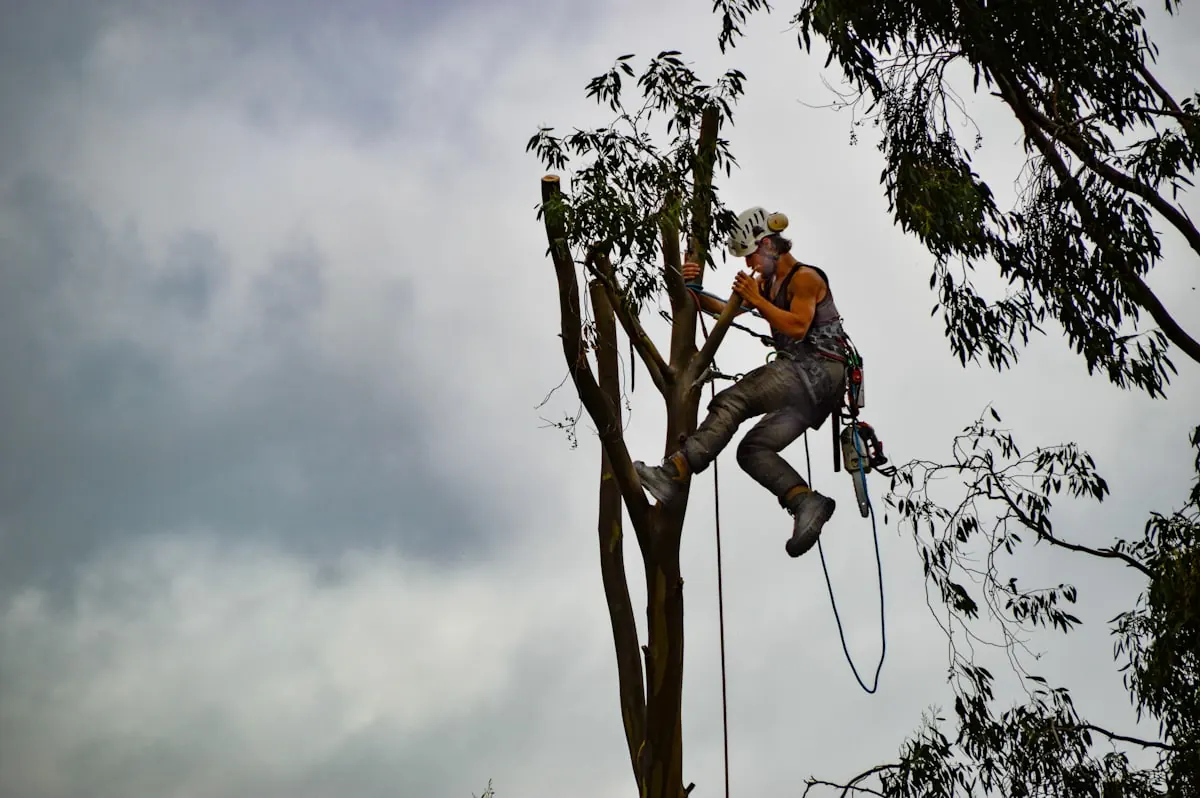
We're a tree care company based in Wilmington, and we work only in Delaware, covering New Castle, Kent and Sussex counties with our own crews and one phone number. The person who looks at your tree is part of the team that does the work, and we never hand a job to a subcontractor.
That local focus is where our experience shows. We know which towns have their own tree rules, which utility serves which street, and how Delaware's soils and storms affect the trees growing in them. It's the difference between a quote based on the actual job and a guess made over the phone.
Explore Our Tree ServicesCredentials
You shouldn't have to take a tree company's word for it. Below is what we hold, and how you can check each one before anyone climbs your tree.
Every job is assessed in person by an experienced member of our own team, who explains what the tree needs and why before any work is quoted.
We carry general liability and workers’ compensation insurance. Ask for a certificate of insurance before the job and we’ll provide one.
We hold a State of Delaware business license. Delaware has no separate arborist license, which is why we put our insurance and written quotes in front of every customer.
Our crews follow the ANSI Z133 tree care safety standard and OSHA practices on every job: set drop zones, clear communication and controlled rigging.
What drives us
We want tree work in Delaware held to a real professional standard, even though the state doesn't license it. That means trained, insured crews, honest advice about whether a tree can be saved, and a written quote before any work starts, whether it's a routine prune in Wilmington or a fallen tree at 2 a.m. in Sussex County.
To care for Delaware's trees and protect the people and property around them, safely and honestly, with experienced tree experts leading the work. We keep every job in-house and fully insured, so you always know who is responsible.
Why choose us
Credentials matter, but so does how a company treats you. Here's what you can expect when you work with us.
Local knowledge matters
Delaware is a small state, but its rules, utilities and hazards change from place to place. Getting them wrong is where tree jobs, quotes and safety go sideways.
Delaware has no arborist or tree care license: no state exam and no registry to check a company against. Anyone can advertise tree service, so insurance, a written quote and an in-house crew are what to ask for.
Delmarva Power serves most of the state, but Newark runs its own electric utility, and Wilmington has its own street-tree permits and a 2-inch pruning rule. Work near power lines or on street trees depends on knowing exactly which rules apply.
Emerald Ash Borer leaves dead ash brittle and unsafe to climb, and oaks need to be pruned in the dormant season to reduce the risk of oak wilt. Both call for the right timing and technique.
Nor’easters, summer downbursts and hurricane-season winds all hit Delaware trees, and sandy coastal soil changes how roots hold. Pruning and inspection before storm season lowers the chance of storm damage.
Our method
We follow the same six steps on every job, from a routine prune to a storm emergency, so you know what happens between your first call and the final cleanup.
Our arborist looks at the tree first: defects, lean, what it hangs over, and how a crew and truck can actually reach it.
We weigh the risk and decide on the right approach (remove, prune or cable) and flag any permit, power line or oak-wilt timing that changes the plan.
You get a written quote you can hold us to: what we’ll do, how we’ll reach the tree and what it costs. We never guess at a price before seeing the tree.
Our own crew does the job, rigging and lowering the tree in sections where space is tight.
We protect your lawn, garden beds, fences and the trees you’re keeping, and we never touch a limb that’s contacting a live power line.
We haul away chips, limbs and debris and leave the site tidy. If you want the stump gone, we can grind it too.
Where we work
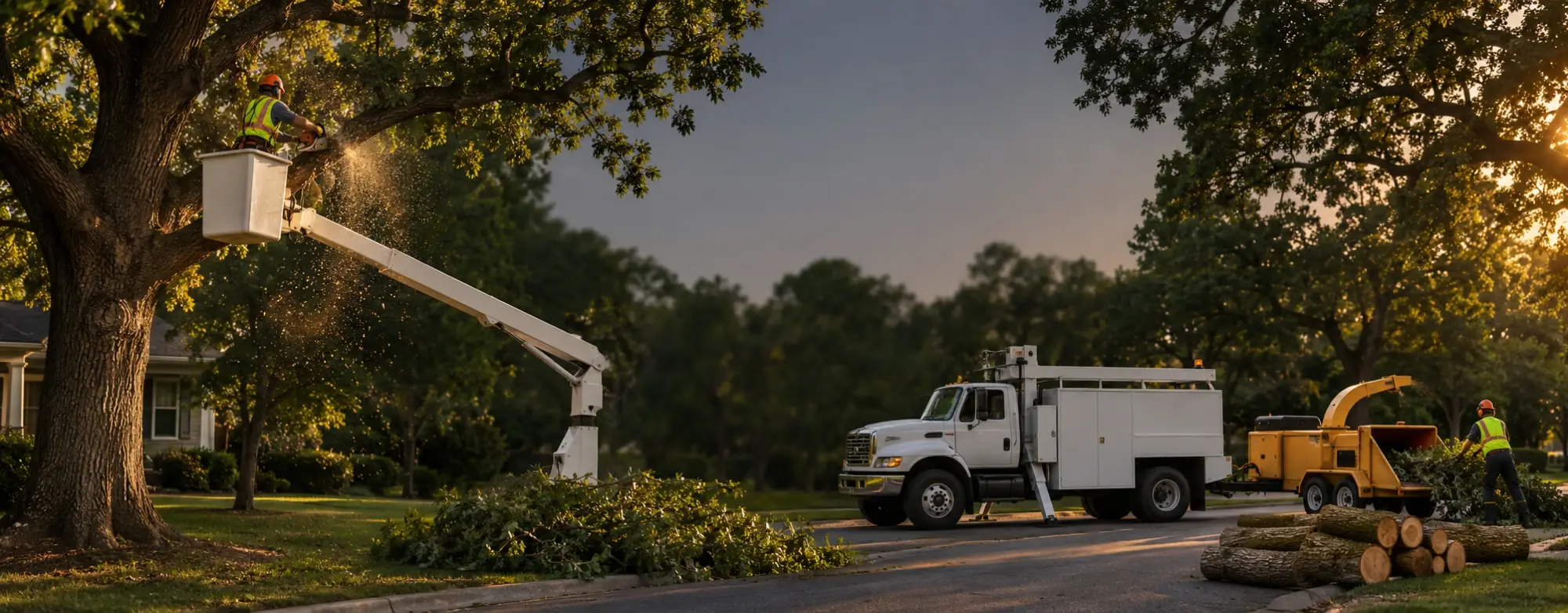
We're based in Wilmington and work throughout Delaware, across New Castle, Kent and Sussex counties. Each county has its own ground and its own tree problems, and we plan every job around them.
Rocky clay over shallow bedrock, mature oak and tulip poplar, and city tree rules in Wilmington and Newark.
Flatter, sandier ground, farm windbreaks and hedgerows, and easier access most of the year.
Loblolly pine, high water tables and salt air near the inland bays, where roots hold very differently than in Piedmont clay.